The Organized Crime Winery
Broken Stone Winery
Icellars Estate Winery
Closson Chase
The Organized Crime Winery
Beamsville Bench, Canada
About The Organized Crime Winery
The Organized Crime Winery is a small family-owned estate winery located on the upper slopes of the Niagara Escarpment in the Beamsville Bench sub-appellation. Founded by Jan and Krystyna Tarasewicz in 2006, it is now run by Ania de Duleba and Edward Zaski, and winemaker Greg Yemen.
Our 40 acre property is planted with 25 acres of vinifera vines, with the rest of the land consisting of woodlands, ponds, streams and naturalized areas. Our vines are farmed in a thoughtful manner using best-practice viticulture with the health of the whole vineyard in mind. We have adopted a ‘no till’ policy in our rows, and this approach has allowed for a healthier and more balanced ecosystem, with the native flora and fauna thriving alongside our vines. In the winery our wines are treated with the same respect, allowing the variety, vintage and vineyard site to express themselves clearly. While respecting classic winemaking techniques, we are never afraid to experiment and push forward. This approach has led to The Organized Crime Winery consistently placing in the “Top 10 Small Wineries in Canada” at the National Wine Awards of Canada.
Representative Biography
Greg Yemen, Winemaker
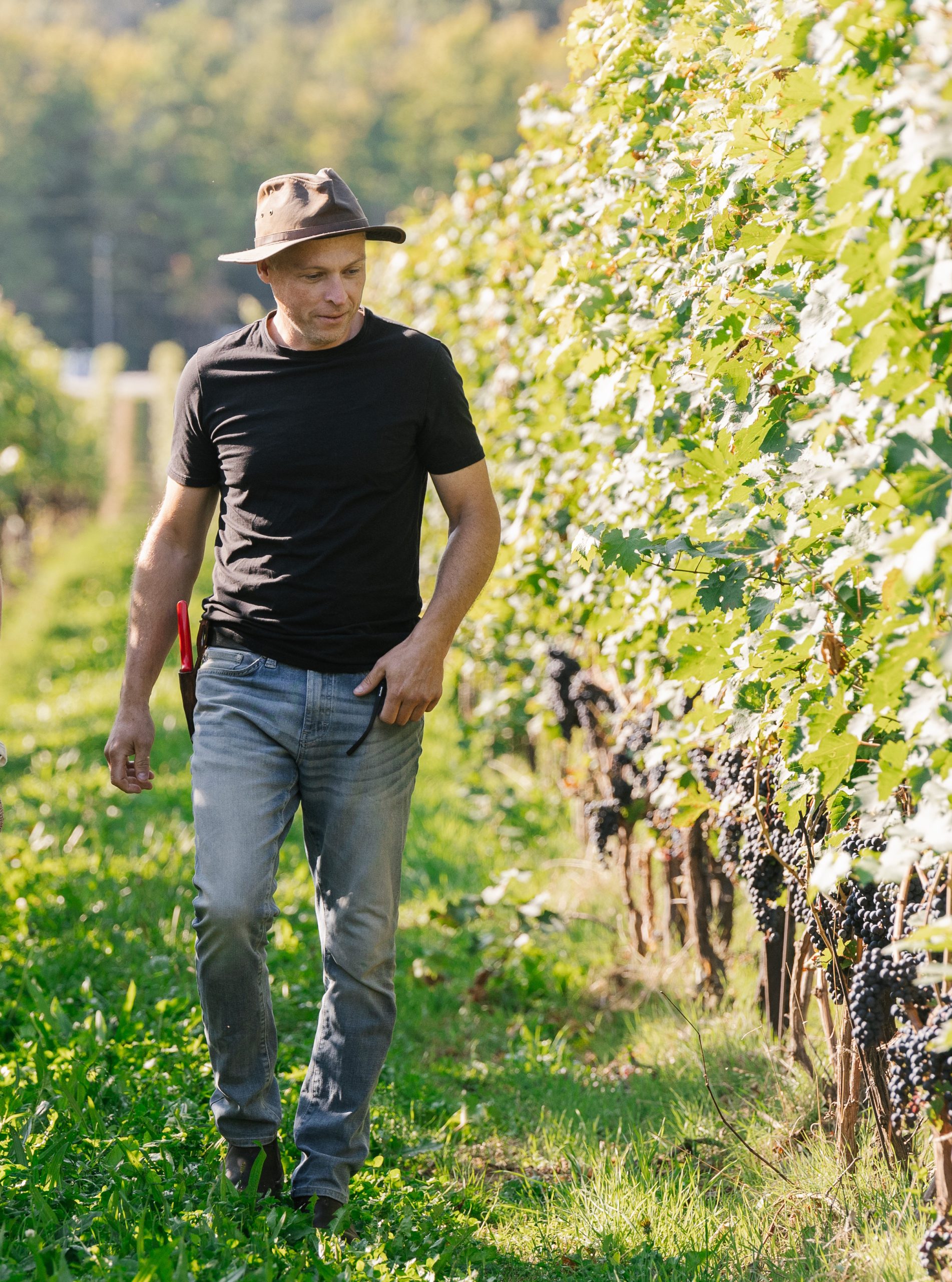
A lifetime ago while living on Vancouver Island working as a finishing carpenter, our winemaker Greg Yemen caught the wine bug many have fallen victim to. Upon returning to Ontario with his wife, Greg enrolled in the Niagara College Winery Program and gained employment at a small family-owned winery in Vineland.
After working through a number of Niagara vineyards and wineries, Greg joined The Organized Crime Winery team in 2014, and took over as winemaker in 2016. What makes his role unique, is that alongside winery owners Ania de Duleba and Edward Zaski, Greg farms all the grapes that he uses to make our wines. You are just as likely to find him in the cellar as you are to find him on the tractor in the vineyard.
Greg’s winemaking philosophy is not bound by any one ideology, but rather each vintage is approached with an open mind, and the desire to make the best wine possible. He has taken a very minimalist approach to our Chardonnay program, and is always looking for elegance and balance in the wines to truly reflect our vineyard site and growing season.
Why We're Cool
We are fortunate to grow our grapes on the cool and breezy upper slope of the Beamsville Bench. This ideal climate in combination with our clay/ limestone glacial till soils, are what allow us to craft elegant and pure vineyard-focused wines. With our long, cool ripening period, we consistently achieve ripeness without elevated sugar levels, while maintaining the benchmark acidity essential for great Chardonnay.
Our grapes are hand-picked on taste before they express an overripe Chardonnay character, and always with acidity in mind. The fruit is gently whole-bunch pressed, typically with no additions and the juice put to barrel with little or no settling. We use puncheon and foudre rather than small barrique, and always allow the juice to ferment and undergo malolactic fermentation using native yeast and bacteria. The wines are left to rest on their ferment lees for 10-14 months and battonage is avoided to retain freshness and purity. Every vineyard and winemaking decision is made with the goal of crafting elegant and complex cool climate Chardonnay.
Broken Stone Winery
Prince Edward County, Canada
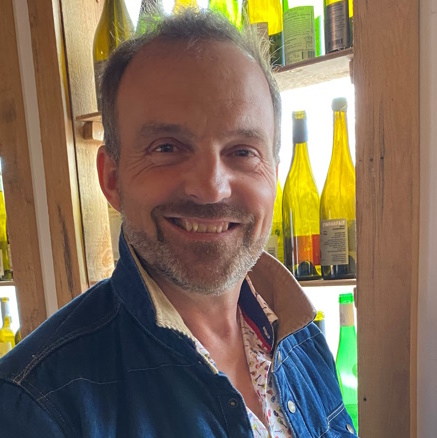
About Broken Stone Winery
Broken Stone Winery is a small family-owned winery in Prince Edward County, Ontario. The winery is 115 m above sea level at 44.0011° N. An island at the east end of Lake Ontario, Prince Edward County’s unique geography, creates a microclimate that is ideally suited to growing world class chardonnay and pinot noir.
The soil of our vineyard is ancient glacial till called Hillier Clay Loam. The name Broken Stone refers to the limestone fragments that are strewn throughout our vineyards. Our hot summer days and cool nights, combined with the limestone soils allow us to grow elegant, mineral-driven Chardonnay and Pinot Noir.
Although our latitude is further south than Burgundy, our winters are more severe, and in the Fall we tie our vines down to a low wire and bury the entire vineyard underground – ensuring the survival of the cold-sensitive vines for the next vintage. Because of this difficulty and expense, our region attracts only the most passionate and stalwart winegrowers dedicated to the perfection of the grape and the wine.
We are Tim and Micheline Kuepfer, the proprietors of Broken Stone Winery. We founded our vineyards and winery on pure grit and determination to craft world class wines.
Representative Biography
Tim Kuepfer, Proprietor & Winemaker
Raised in a small farming community, Tim pursued a business degree from the Ivey Business School at the University of Western Ontario and spent two decades in Toronto selling financial software and databases. During those years, Micheline and Tim raised a family and worked corporate careers while dreaming about living on a vineyard in the country.
But it could be said that Tim worked city jobs for twenty years waiting for the chance to live his true life amidst the vines at his small farm in Prince Edward County. To Tim’s chagrin, his wife Micheline often says, “you can take the boy out of the country, but you can never take the country out of the boy.”
Tim’s viticultural training began in 2009 when he and Micheline purchased 34 acres in Prince Edward County with one acre of just-planted Pinot Noir vines. Tim learned viticulture by getting his hands dirty in that little vineyard, doing every task himself for the first years. The local crop extension and other grape growers were his mentors. He planted another acre of Pinot Noir and three acres of Chardonnay were planted in 2010. He learned the science of winemaking by completing the UC Davis Certificate in Winemaking and learned the craft from new friends in the Prince Edward County Winegrower’s Association. But his main source of expertise was gained by just going out and making wine. Broken Stone Winery has grown from that first acre in 2009 to growing 21 acres of cool climate grapes today, with Tim managing every detail of grape growing and winemaking and Micheline providing insights into marketing and creating great products.
“When the grapes shine like gold in the morning sun and taste like honey, we know it’s time for harvest. So do the birds.”
“The vineyard is the foundation of our winery. It’s where the important work is done. If we’ve done a world class job in the vineyard during the growing season, the fruit is sound and it’s almost like the wine makes itself. “ Tim Kuepfer
Why We're Cool
Broken Stone Winery Chardonnay Vineyard
115 m above sea level
44.0011° N
Slightly North sloping.
Soil type Hillier Clay loam
Soil depth 6 inches to 5 feet, averaging 2 feet
Dry Farmed
Clone 76 on 3309
By Chadsey’s Cairns – King Eddie Vineyard and Applehouse Vineyard
90 m above sea level
43.9518° N
South sloping
Soil type Brighton Gravelly Sand, Hillier Clay Loam
Soil depth 10 feet +
Dry Farmed
Unknown clones on S04
Time Honoured Methods
Our County Grown Chardonnay is harvested 100% from grapes grown in Prince Edward County at two distinct sites.
We harvest Chardonnay from our own 3-acre vineyard and from another 2 acres that we lease at By Chadsey’s Cairns. Both sites offer different microclimates. Broken Stone Winery’s vineyard is moderately vigorous and was planted on shallow rock and clay in 2010. At Broken Stone the summers are hot and droughty. In contrast, By Chadsey’s Cairns vineyards were planted twenty years ago on a vigorous rootstock in deep sandy soils. It is only 500 meters from Lake Ontario, so the summer temperatures are moderated by cool breezes and the occasional shower off the lake.
We use the vertical shoot positioning system with 9 x 4 foot spacing and tie up 4 canes per plant. This may seem like a lot of buds in the trellis, but the extra shoots provide a sink for vigour, and several are buds lost or damaged when we bury the vines under soil in the winter. A key component of our nutrition and spray program is a compost tea, which has repellent effects on leaf hoppers and fungal disease as well as providing nourishment. Before Veraison, we strip the leaf zone to expose the Chardonnay grapes to the sun and wind, preventing disease and enhancing ripeness. The leaf-pulling is done manually both by humans and by our small flock of hungry Babydoll sheep. The fruit turns golden and the brix approaches 21.5 around October 1. We carefully hand harvest into 15 kg lugs, crush, press, and ferment the wine. Part of our ferment is in 1–3-year-old oak barrels and a portion is in stainless steel. After 8 months ageing, we blend a portion of the steel fermented wine with the wood fermented wine to produce our premium County Grown Chardonnay. The remainder goes into our popular unoaked Chardonnay Sans Chêne.
We believe great wine is made in the vineyard, so we spare no effort in caring for our vines.
Our winemaking delivers bright, pristine, mineral-driven Chardonnay with just a nod to oak and malolactic fermentation.
Icellars Estate Winery
Niagara, Canada
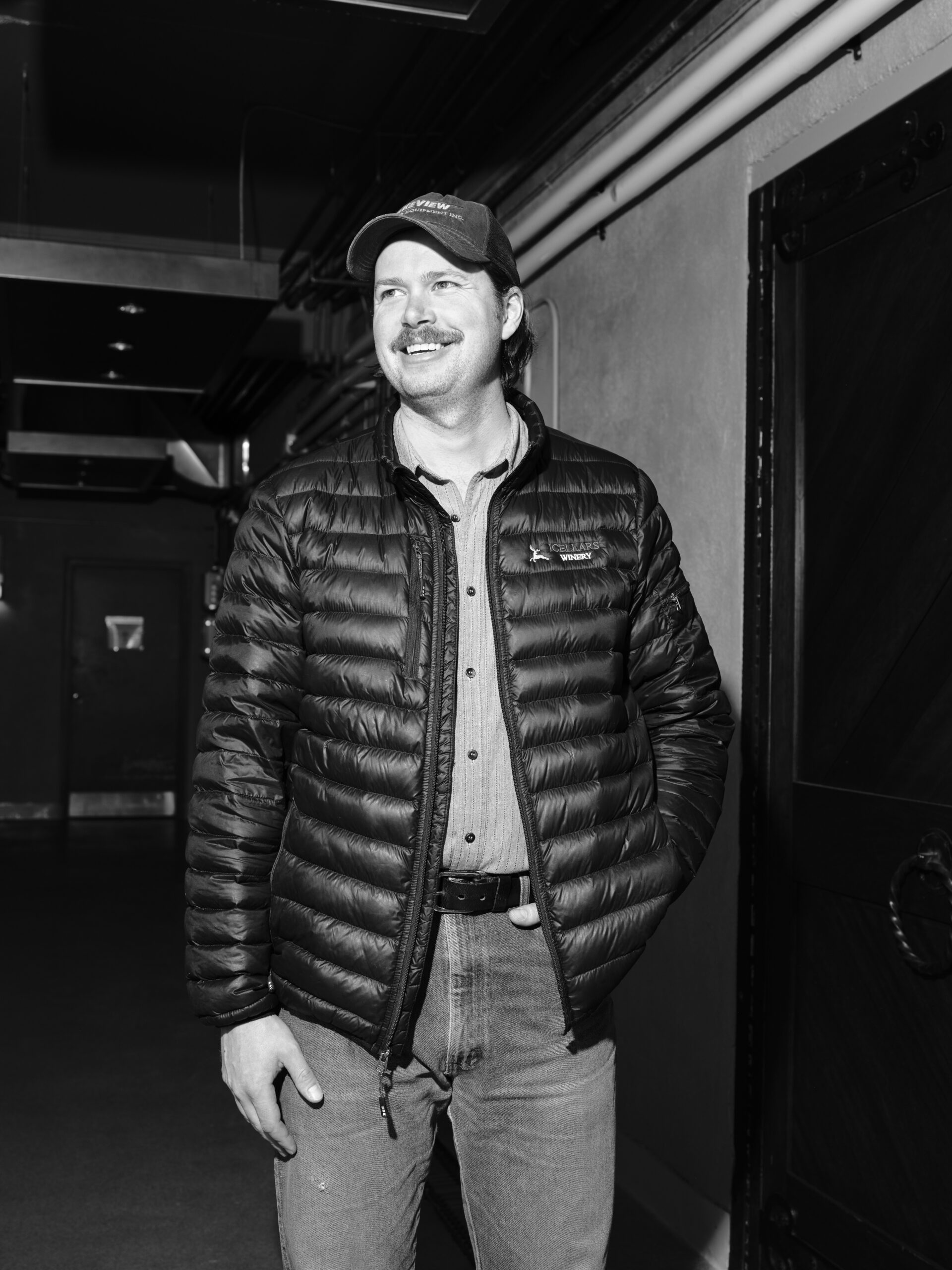
About Icellars Estate Winery
Icellars Estate Winery is a family-owned boutique winery in Niagara-on-the-Lake, founded by the Icel family and opened its doors in 2016. We've dedicated ourselves to proving that Niagara can produce world-class Bordeaux-style wines—particularly age-worthy Cabernet Sauvignon. When we first planted, many thought we were foolish, but the wines have since spoken for themselves.
Our 47 acres of estate vineyard are meticulously tended by hand. We control every step of production under one roof: growing, harvesting, fermenting, aging, and bottling. As Canada's first Net Zero Energy winery, our commitment to sustainability runs as deep as our commitment to quality. When you visit, you're not a customer—you're a guest, greeted by the family who makes the wine.
Representative Biography
Mark Williamson, Winemaker
Mark is the Winemaker at Icellars Estate Winery. A graduate of Niagara College's Winemaking & Viticulture Technician Program (2018) and the University of Ottawa, he has spent nine vintages working across Ontario, including positions at Featherstone Winery, Southbrook Vineyards, Dark Horse Estate Winery, and Glen Elgin Vineyard Management.
Mark first joined Icellars briefly in 2018 and returned as Vineyard Manager in 2021, working closely with founder and Winemaker Adnan Icel until Adnan's passing in May 2025. In early 2024, Adnan passed the Winemaker title to Mark as he looked to step back from the that role. The winery continues to work with consultants Ann Sperling and Peter Gamble, who have guided the estate since its early days. A firm believer that the greatest wines are made in the vineyard, Mark brings a viticulturist's perspective to every wine he crafts.
"I love working with Chardonnay. I'm always after that electricity you get from great terroir. Having that energy present in Chardonnay when it's young tells me it will age beautifully and be fantastic to cellar for several years."
Why We're Cool
Chardonnay may represent a small part of our estate, but we approach it with the same uncompromising philosophy we bring to our reds. All vineyard work is done by hand—shoot thinning, cluster selection, leaf removal, hand-picking, and meticulous sorting. Whole clusters go directly to press.
We ferment and age our Chardonnay in 500L French oak puncheons, carrying the wine through full malolactic fermentation. The result balances the refreshing acidity of our cool climate with the richness and texture of Niagara-on-the-Lake terroir and barrel fermentation—a Chardonnay built for those who appreciate both restraint and depth.
Closson Chase
Prince Edward County, Ontario
About Closson Chase
Until the 1990s, Prince Edward County was best known as an agricultural region focused on fruit and vegetable production. Closson Chase began as a bold idea when a group of wine industry pioneers recognized the County’s potential for cool-climate viticulture.
After two years of detailed soil analysis, celebrated winemaker Deborah Paskus selected a site at the intersection of Closson and Chase Roads in Hillier Township. The former dairy farm, owned by early County settlers the Closson family, sits approximately five kilometres inshore from Lake Ontario on a six-degree south-facing slope. With excellent drainage and gravelly calcareous soils over limestone, the site proved ideally suited to cool-climate chardonnay and pinot noir.
Closson Chase Vineyards was established in 1998, with the first commercial vintage produced in 2004 from a restored century-old dairy barn. From the outset, the winery played a defining role in the emergence of Prince Edward County as a premium wine region.
In 2015, after more than a decade working alongside Deborah Paskus, Keith Tyers assumed the role of Head Winemaker. Under his leadership, Closson Chase has continued to refine its focus on vineyard-driven wines that express vintage, site, and season.
Firmly believing that exceptional wine is made in the vineyard, Keith has maintained the estate’s traditions of high-density planting, careful canopy management, low yields, and hands-on vine care, including burying canes and dormant-season pruning. These practices, paired with a growing commitment to sustainability, allow Closson Chase wines to deliver a pure and honest expression of place.
Representative Biography
Keith Tyers, Winemaker
Born and raised in Kingston, Ontario, Keith Tyers brings a deep-rooted hospitality and wine background to Closson Chase. After more than a decade working in the food and hospitality industry and completing his Sommelier training, Keith relocated to Prince Edward County in 2003, drawn by the opportunity to work directly with grapevines and land.
Keith joined Closson Chase during the estate’s earliest years, working his first season as a vineyard labourer and becoming deeply involved in both viticulture and winemaking. In 2004, he completed his first harvest and began working closely with Deborah Paskus as Assistant Winemaker, gaining hands-on experience in a region still defining its identity.
After stepping away briefly to broaden his experience, including working alongside Ron Sparanzini at Oak Heights and consulting with County growers, Keith returned to Closson Chase in 2012. He was appointed Head Winemaker in 2015.
Years spent working in the vineyards have given Keith an intimate understanding of the soils, microclimates, and growing conditions across the estate’s three vineyard sites. His goal is simple and unwavering: to translate that understanding into wines that reflect their origin, from grapevine to glass.
“My hope is that when someone opens a bottle of Closson Chase wine, they experience the uniqueness of the wine and my interpretation of our place.” — Keith Tyers
Why We're Cool
Prince Edward County offers some of the most compelling conditions in Ontario for growing Vitis vinifera. Closson Chase’s early decision to focus on chardonnay and pinot noir reflects a deep understanding of the site’s natural advantages.
The Hillier clay loam soils at Closson Chase are well to moderately draining, with a shallow topsoil layer of organic matter and fractured limestone rubble over solid limestone bedrock. This structure encourages deep root penetration while retaining moisture at depth, promoting balanced vine growth.
The calcareous nature of the soil, formed from millennia of marine deposits, results in a naturally high pH of approximately 7.9 to 8.1. These conditions support vine health and contribute to the precision, structure, and minerality found in Closson Chase wines. The pale limestone rubble also reflects sunlight into the canopy, supporting even ripening and fruit development.
Prince Edward County’s climate is heavily moderated by Lake Ontario, creating a long, gradual growing season despite its northerly latitude. Closson Chase benefits from an early spring warm-up due to its south-facing slope, combined with good airflow and drainage. While spring frost risk exists, the site reliably achieves full ripening before the cooler autumn sets in.
Chardonnay and pinot noir, both early bud-breaking and early ripening varieties, are ideally suited to these conditions. The combination of soil, climate, slope, and varietal choice allows Closson Chase to consistently produce wines of balance, tension, and longevity that reflect their cool-climate origins.
Thank you to the i4C 2026 Presenting & Grand Cru Sponsors